Is it Akvavit, Akevitt or Aquavit?
If you have come across different spellings of aquavit, you are not alone in wondering what the difference is. In practice, there is no strict distinction. The variations reflect language rather than fundamentally different products.
What Is Aquavit? Akvavit, Akevitt or Aquavit Explained
Quick Answer: What Is Aquavit?
Aquavit is a Scandinavian spirit flavoured primarily with caraway or dill.
It is typically distilled from grain or potatoes and has been part of Nordic culture since at least the 1500s. The different spellings — aquavit, akvavit and akevitt — all refer to the same type of spirit, shaped by local languages and traditions.
Why Is It Spelled Aquavit, Akvavit or Akevitt?
The name comes from the Latin aqua vitae, meaning “water of life.” As distillation spread through Northern Europe during the late Middle Ages, the term was gradually adapted into local languages:
- Aquavit – commonly used internationally and in English
- Akvavit – Danish and Swedish spelling
- Akevitt – Norwegian spelling
All three refer to the same category of spirit. The spelling usually signals origin rather than a different style.
What Does Aquavit Taste Like?
Aquavit is defined by its use of caraway or dill, which gives it a distinctive herbal and slightly savoury profile.
Typical flavour notes include:
- Caraway (warm, slightly peppery)
- Dill (fresh, green, aromatic)
- Fennel or anise (light sweetness)
- Citrus peel or spice (in some styles)
Compared to gin, aquavit is much less dominated by juniper and often feels rounder and more food-oriented in flavour.
How Aquavit Is Made
Aquavit production follows the same core principles as other distilled spirits, with a few defining characteristics. This is a quick overview, you can find the full article on the subject here.
The base spirit for Aquavit is typically made from:
- Grain (wheat, rye or barley)
- Potatoes (more common in traditional styles)
Flavouring
The defining step is the addition of botanicals, especially:
- Caraway (required in EU definitions)
- Dill seed (commonly used alongside or instead)
These must be added through redistillation with botanicals
also commonly used are
- Fennel
- Citrus
- Angelica
- Pepper
- Star anise
- Grains of Paradise
- Anise
these can either be added through distillation or by infusion.
Maturation (optional)
Some aquavits are:
- Unaged and clear
- Aged in oak casks, which adds colour and complexity
Danish vs Norwegian vs Swedish Aquavit
While the name is shared, styles vary across Scandinavia.
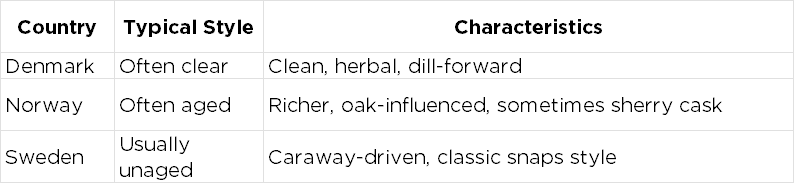
These are general tendencies rather than strict rules, but they help explain why aquavit can taste quite different depending on origin.
Is Aquavit the Same as Schnapps?
Aquavit is sometimes referred to as schnapps or snaps, but the terms are not identical.
- Aquavit is a defined spirit category with specific botanical requirements (caraway or dill)
- Snaps is a broader term that can refer to many types of flavoured spirits, depending on country and context
- In Denmark the word snaps is used synonymous with akvavit
- in Sweden and Norway snaps is method - if it's drunk fast, it is snaps.
- schnapps is a german spelling and refers to spirits in general if they are stronger than 35 %
How to Drink Aquavit
Traditionally, aquavit is served:
- Chilled, in small glasses (snaps)
- Alongside food, especially:
- Pickled herring
- Smørrebrød
- Rich or salty dishes
In modern settings, aquavit is increasingly used in cocktails, where its herbal profile works well with citrus, bitterness and fresh ingredients.
FAQ About Aquavit
Is aquavit the same as vodka?
No. While both are clear spirits, aquavit is flavoured with botanicals like caraway or dill, whereas vodka is typically neutral.
What is aquavit made from?
It is usually distilled from grain or potatoes and flavoured with herbs and spices.
Is aquavit always flavoured with caraway?
Caraway and dill seed are the defining botanicals in EU regulations, so either can dominate the flavour.
How strong is aquavit?
Most aquavits are bottled between 37.5% and 45% ABV.